
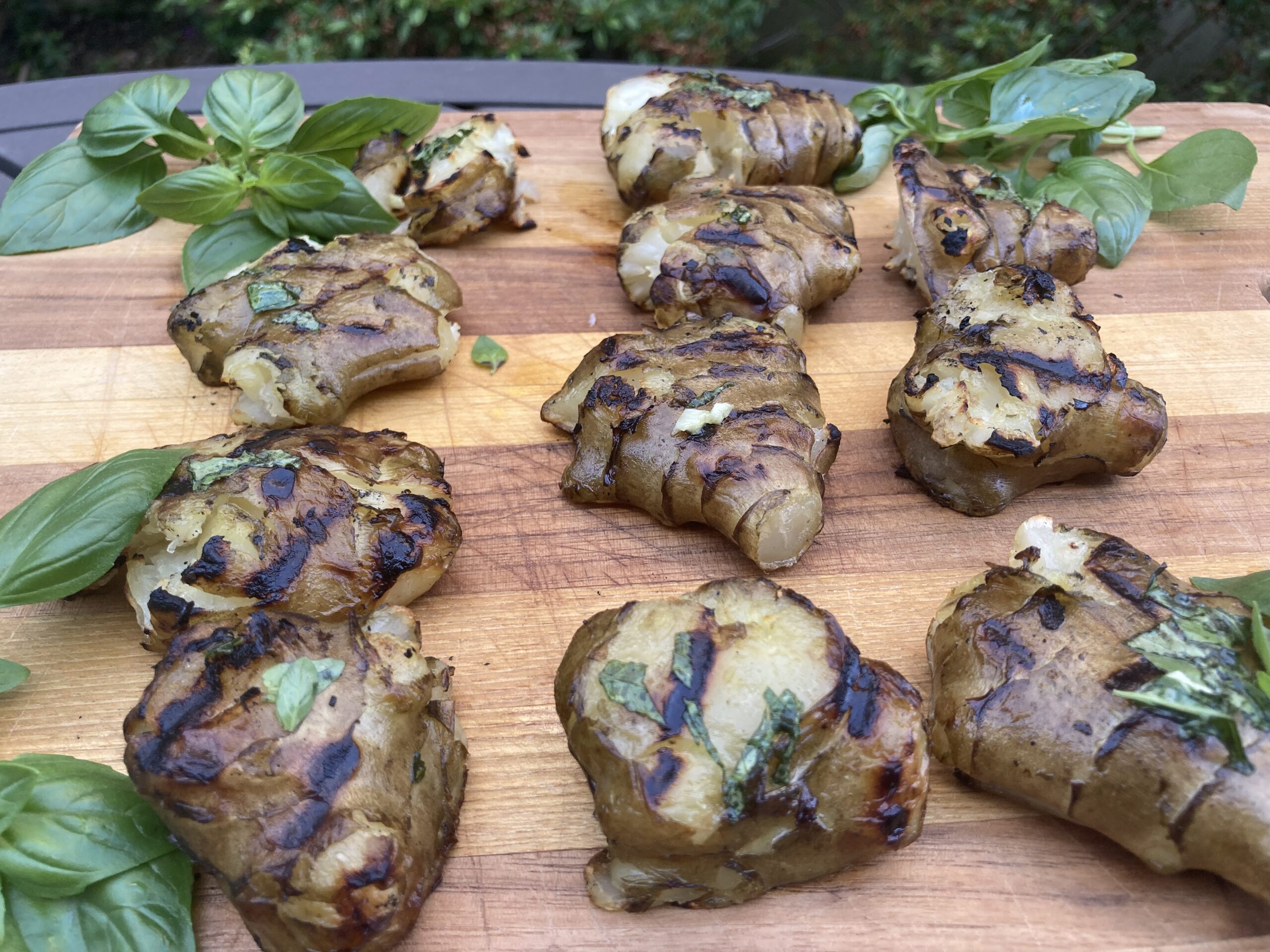
Sunchokes, also known as Jerusalem artichokes, are edible tubers from a sunflower species native to central North America. They have a sweet, nutty flavor with a slightly crunchy potato-like texture and can be eaten raw, boiled, steamed, roasted, grilled, and pickled.
Makes 6 servings
Ingredients:
- 1-1/2 pounds sunchokes, rinsed and trimmed of any dark spots (about 9)
- ½ teaspoon baking soda
- ¼ cup olive oil, divided
- 1 garlic clove, minced
- 1 tablespoon chopped fresh basil
- Kosher salt and pepper to taste
Directions:
- In a medium saucepan, cover the sunchokes with 1-inch of cold water. Add baking soda and bring to a boil over high heat. Reduce heat to a simmer and cook for about 10 minutes until slightly tender. (A paring knife inserted should have a little resistance.) Do not overcook.
- Meanwhile combine 3 tablespoons of the olive oil, the minced garlic, and the chopped basil in a small bowl. Add salt and pepper to taste. Set aside.
- Drain the cooked sunchokes in a colander. Cool just enough to handle. Place the sunchokes on a cutting board. With a flat meat tenderizer or heavy skillet, press firmly on each sunchoke until it is flattened, taking care not to press too hard, so it doesn’t break apart. (Note: Sunchokes that are large can be cut in half before pressing to flatten).
- Heat the grill to medium-high, about 400°F. Brush one side of the sunchokes with the remaining tablespoon of olive oil. Place the sunchokes on the grill in a single layer, oil side down. Cook for 3 to 5 minutes without moving, then turn them and brush the grilled side with the mixture of olive oil, garlic, and basil. Grill for about 3 minutes longer.
Tips:
- The recipe adds a small amount of baking soda to the cooking water to increase alkalinity. This helps the outside edges of both potatoes and sunchokes get crispier before roasting or grilling.
- A sunchoke’s skin is edible. Don’t peel them if you plan to grill them. The skin helps them hold their shape on the grill.
- Sunchokes are a good source of potassium, iron, fiber, and inulin, a prebiotic fiber that promotes gut health. Please be careful, though: too much inulin can cause gas and bloating.